



Smart cities—urban environments where digital technologies and interconnected devices optimize everything from traffic flow to energy use—promise greater efficiency, sustainability, and quality of life. Yet this very interconnectivity expands the cyber-attack surface exponentially. Below, we explore the challenges of securing smart cities, the real-world impacts of breaches, and best practices for safeguarding critical urban infrastructure.
Above all, cities should leverage proven frameworks and collaborative partnerships to build an adaptive security posture capable of evolving alongside their expanding digital ecosystems.
The Growing Target
By the end of 2023, there were 16.6 billion connected IoT devices worldwide—projected to rise to 30 billion by 2030, many of which serve smart-city functions such as traffic sensors, smart meters, and public-safety systems. Each new device represents a potential entry point for attackers, and the diversity of protocols, vendors, and legacy systems makes comprehensive security a complex task.

Diverse and Evolving Threats
This fusion of domains, combined with a rapidly growing IoT footprint and cloud-delivered services, dramatically expands the potential attack surface. Threat actors have adapted accordingly, employing sophisticated, multi-stage campaigns that can exploit software vulnerabilities, hijack supply chains, and leverage insider access to disrupt essential urban functions.
Smart cities face a broad spectrum of cyber threats:
- Malware and ransomwaretargeting central management platforms
- Distributed Denial-of-Service (DDoS)attacks aimed at crippling essential services
- Insider threatscompromising sensitive data from within
- Supply-chain attacksthrough insecure third-party IoT components
These threats stem from the integration of IT (information technology) with OT (operational technology) across transportation, utilities, and public-safety systems.
Financial and Operational Impact
Urban centers increasingly depend on real-time data and automated controls to manage critical services—power distribution, water treatment, transportation networks, and emergency response systems.
When these digital systems are compromised, the fallout extends far beyond IT budgets: service outages can endanger public safety, erode citizen trust, trigger regulatory penalties, and ripple through local economies.
Municipalities may face not only the direct costs of breach containment and system restoration, but also longer-term expenses such as legal fees, fines, and damage to reputation. In many cases, the complexity of interdependent infrastructures means that an attack on one subsystem can cascade rapidly into others, multiplying both the scope and expense of recovery.
When urban infrastructure is breached, the consequences can be severe:
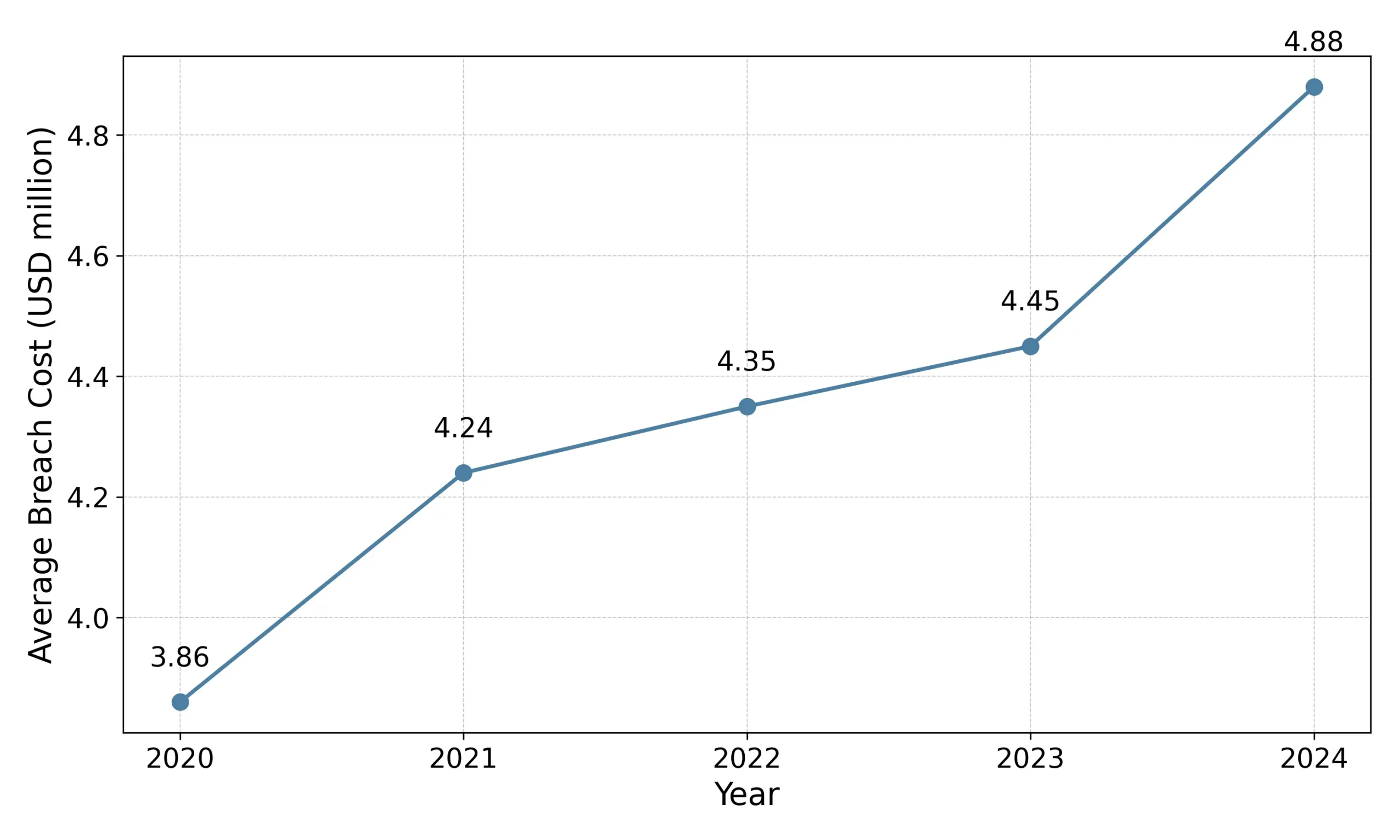
- The global average cost of data breach in 2023 was USD 4.45 million, according to IBM—likely higher for municipalities given their critical services and public-safety obligations.
- In the U.S., USD 135 billion is slated for cybersecurity spending in 2024, yet only 44% (USD 59.4 billion) is allocated to sectors like energy, healthcare, transportation, water, and waste—leaving them under-protected The Independent.
- A report from Australia’s Signals Directorate found that 11% of all cybersecurity incidents involved critical-infrastructure sectors (electricity, gas, water, transport, education) in the past year.
- There were about 500 publicly disclosed IoT-related data breaches in 2023, underscoring the vulnerability of even “simple” sensor networks.
Case Study: Iberian Peninsula Blackout (April 28, 2025)
On April 28, 2025, a massive blackout swept across Spain, Portugal, and parts of southern France—Europe’s largest to date—offering a stark warning of what a nationwide loss of electricity can trigger.
In under a minute, Spain’s output collapsed from 27 GW to just over 12 GW—a 15 GW drop that instantly severed the Spain–France interconnection and sent rolling outages across international borders .
Although investigators later ruled out a cyber-attack, this event lays bare how quickly critical services—from hospitals to transportation networks—can grind to a halt in a national emergency.
Investigation & Official Findings
Cyber-attack Ruled Out: On 17 June 2025, Spain’s Minister for Ecological Transition, Sara Aagesen, published a government‐commissioned report concluding there was no cyber-sabotage. Instead, the blackout resulted from a cascading over voltage event—driven by high inverter-based renewables penetration, insufficient conventional inertia, and failures in voltage‐ride-through performance of generators—which triggered sequential generator trips and system collapse theguardian.com.
ENTSO-E Expert Panel
Mandate & Timeline: ENTSO-E formed a joint Expert Panel on 12 May 2025 under EU Regulation 2017/1485. The Panel has gathered data from 32 parties and will deliver:
- A factual report (due by 28 October 2025, likely earlier)
- A final recommendations report (2–3 months after the factual report)
Scope: They’re examining why the first units disconnected, why System Defence Plans failed, and will integrate the Spanish government and Red Eléctrica TSO analyses into their work entsoe.eu.
Restoration Chronology
(All times CEST, 28 April → 29 April)
- 12:33 Blackout onset across Spain, Portugal (and briefly in SW France)
- 12:35 Black-start procedures begin
- 13:04 Morocco–Spain interconnector re-energized
- 13:35 Eastern France–Spain interconnector re-energized
- 18:36 220 kV tie-line Portugal–Spain re-energized
- 21:35 400 kV tie-line Portugal–Spain re-energized
- 00:22 (29 Apr) Portugal transmission system fully restored
- 04:00 (29 Apr) Spain transmission system fully restored ferc.gov.
Casualties & Load Impact
- Deaths/Injuries: Approximately 7 deaths in Spain, 1 in Portugal, and >25 non-fatal injuries (e.g., from generator fumes or candle fires).
- Disconnected Load: Peaked near 30 GW before black-start en.wikipedia.org.
EU Response & Resilience Measures
- €1.6 Billion EIB Loan: On 16 June 2025, the European Investment Bank approved funding for a new 400 km subsea interconnector (Bay of Biscay), doubling Spain–France capacity from 2.8 GW to 5 GW by 2028—critical to reach the EU’s 15% cross-border connectivity goal by 2030 reuters.com
These updates reinforce that the 15 GW generation loss was a technical cascade, not a cyber-attack, and have already spurred both deep investigations and major grid-strengthening investments across Europe.
Securing Smart Cities - Best Practices and Frameworks
Developing a resilient cybersecurity strategy for smart cities requires more than point solutions—it demands a comprehensive, defense-in-depth approach that spans technology, processes, and people.
Standards & Compliance considerations show that there are key EU-level laws, directives and certification schemes that impose concrete security requirements on public-facing devices and services:
Regulatory Compliance & EU Cyber-Law
Beyond voluntary frameworks, smart-city deployments must satisfy a growing body of binding EU requirements—both horizontal and sectoral—that mandate security-by-design, incident reporting, resilience testing and (in many cases) third-party certification:
Standards & Compliance considerations show that there are key EU-level laws, directives and certification schemes that impose concrete security requirements on public-facing devices and services:
- NIS Directive & NIS2
- The original Network and Information Security (NIS) Directive (2016) and its successor NIS2 (2024) require “operators of essential services” (e.g. energy, transport, water, digital infrastructure) and certain digital service providers to implement risk-based security measures and to notify ENISA-designated Computer Security Incident Response Teams (CSIRTs) within strict timelines.
- EU Cybersecurity Act & Certification Schemes
- Establishes the first EU-wide framework for voluntary (and eventually mandatory) product and service certification (e.g., “Cybersecurity Certification Scheme for IoT”). Manufacturers of smart-city devices can leverage these schemes to demonstrate compliance with robust, pan-European security baselines.
- ETSI EN 303 645 (“Baseline Security for Consumer IoT”)
- Now referenced by EU policy, this standard lays out minimum requirements (unique credentials, secure update mechanisms, vulnerability disclosure policies) that public-facing sensors and gateways should meet “out of the box.”
- GDPR & ePrivacy
- Any device collecting or processing personal data—license-plate readers, smart cameras, public-wifi access points—must adhere to data protection by design and by default, with DPIAs (Data Protection Impact Assessments) and breach-notification obligations under the General Data Protection Regulation.
- Sectoral Acts (DORA, Cyber Resilience Act, eIDAS, Radio Equipment Directive)
- Financial-sector services (ATMs, payment kiosks) fall under the Digital Operational Resilience Act (DORA). The incoming Cyber Resilience Act will cover hardware/software products sold in the EU, and eIDAS 2.0 will raise the bar for connected identity devices. Meanwhile, the Radio Equipment Directive mandates “essential requirements” for any device emitting or receiving radio signals.
Urban planners and IT/OT operators must align on unified policies that enforce rigorous access controls, continuous oversight, and standardized procedures. Governance structures should formalize roles and responsibilities for risk assessment, incident response, and ongoing compliance, while investment in workforce training ensures that staff can recognize and counter emerging threats.
Above all, cities should leverage proven frameworks and collaborative partnerships to build an adaptive security posture capable of evolving alongside their expanding digital ecosystems.
- Network Segmentation & Zero Trust
- Isolate critical OT networks from general IT and public-facing systems
- Enforce least privilege access and continuous verification
- Secure Device Lifecycle Management
- Enforce strong authentication, regular firmware updates, and vulnerability scanning
- Retire or replace end-of-life devices that can no longer receive patches
- Continuous Monitoring & Incident Response
- Deploy Security Information and Event Management (SIEM) for real-time alerts
- Establish dedicated response teams and run regular tabletop exercises
- Standards & Compliance
- Follow frameworks such as NIST’s Cybersecurity Framework and CISA’s “Cybersecurity Best Practices for Smart Cities” detailed above.
- Cross-Sector Collaboration
- Share threat intelligence among utilities, transportation agencies, and public-safety departments
- Engage in public-private partnerships for joint exercises and training
Cybersecurity Spending Projections

Global cybersecurity spending is projected to accelerate sharply through the end of the decade, reflecting both the rising frequency of high-impact attacks and the expanding scope of connected infrastructure.
According to Grand View Research, investment in the United States is expected to climb from USD 65.83 billion in 2024 to USD 120.37 billion by 2030—an increase of over 80%.
Europe follows a similar trajectory, with budgets rising from USD 56.96 billion to USD 107.50 billion over the same period, and the Asia-Pacific region is forecast to more than double its cybersecurity outlays from USD 61.43 billion to USD 146.30 billion.
This sustained growth underscores an industry-wide recognition that traditional perimeter defenses are no longer sufficient in an era defined by cloud services, remote work, and an ever-wider array of networked devices.
For smart city infrastructure—where traffic signals, power grids, water treatment facilities, public-safety communications, and environmental sensors are all online and interdependent—this surge in cybersecurity investment is particularly critical.
As urban environments deploy millions of new IoT endpoints and integrate operational technology (OT) with information systems, the attack surface multiplies, and a successful breach can cascade across services with real-world consequences: traffic paralysis, utility shutdowns, or compromised emergency response.
By allocating robust budgets to threat detection, zero-trust architectures, secure device management, and incident response capabilities, city governments and their technology partners can build resilient digital backbones that not only defend against current threats but also adapt to the evolving tactics of sophisticated adversaries.
Ready to Future-Proof Your City?
Smart Expertise for Smart Cities
Azura Consultancy brings deep, multi-disciplinary expertise to every phase of smart-city and infrastructure development. With a track record spanning urban energy system, telecom networks, data centers, and digital transformation programs, our teams blend technical rigor with strategic vision.
Whether you’re launching a new district cooling plant, modernizing legacy power grids, or integrating IoT into transportation corridors, Azura’s holistic approach ensures that you meet budgetary, schedule, quality, and sustainability targets.
- ICT Consultancy Services, delivering end-to-end IT strategy, system integration, and managed services tailored to municipal needs
- Project Management, providing PMO setup, risk management, and agile delivery for complex, multi-stakeholder programs
- District Energy Solutions, encompassing heating, cooling, and combined heat-and-power systems to optimize urban energy use
- Power and Energy Services, from grid stability assessments to renewable integration studies
- Smart City Infrastructure, designing interconnected sensor networks, command-and-control platforms, and digital twins
- Building Information Modeling, enabling 3D/4D modeling, clash detection, and lifecycle cost optimization
- Alternative Power Solutions, advising on solar, wind, and energy-storage projects
- District Heating Solutions and District Cooling Solutions, ensuring thermal comfort with maximum efficiency
- Geographical Information Systems, mapping assets, performing spatial analysis, and supporting emergency-response planning
- Technical Due DiligenceFeasibility and risk studies for engineering projects and Lender’s Due-Diligence Advisory (LTA) services.
- Telecommunications Network Design Services, delivering resilient, high-capacity backhaul and last-mile solutions
- Data Center Design Solutions and Data Center Consultancy, optimizing power, cooling, and redundancy for mission-critical facilities
- Specialized Engineering Services from structural analysis to environmental impact assessments
By combining these services under one roof, Azura steers future projects toward seamless execution and long-term resilience. For example, when launching a greenfield smart-lighting program, our ICT and GIS teams collaborate to map lamp-post assets and design secure network topologies, while our project managers ensure on-time rollout and stakeholder alignment.
In parallel, our energy specialists evaluate onsite renewables and storage, and our due-diligence experts verify vendor capabilities—so you benefit from a synchronized, risk-aware delivery model.
Whether you’re upgrading an aging district heating loop or building a new data-driven traffic-management center, Azura’s integrated service portfolio means fewer handoffs, clearer accountability, and a stronger assurance that your smart-city vision becomes reality.