


Introduction
Data Center as a Service (DCaaS) provides on-demand data center infrastructure—fully managed compute, storage, networking, power and cooling—delivered via an OpEx-friendly subscription model. By abstracting the complexities of physical hardware and facility operations, DCaaS lets organizations rapidly deploy enterprise-grade environments without the CapEx burden or long lead times of traditional builds. Whether you’re scaling AI workloads, expanding into new regions, or building hybrid-cloud topologies, DCaaS delivers the agility, resilience, and cost predictability modern businesses demand.
As organizations grapple with accelerating digital transformation, surging AI workloads, and the push to decentralize compute to the edge, DCaaS has never been more relevant. It provides the speed and flexibility to spin up high-performance infrastructure in days—supporting everything from machine-learning training clusters to real-time analytics at edge locations—while shifting from capital-heavy builds to predictable operating expenses. Current times necessitate that businesses must respond instantly to market shifts, scale globally without building multiple facilities, and meet stringent data-sovereignty and sustainability targets, DCaaS delivers the turnkey agility, geographic reach, and compliance guardrails that modern enterprises demand.
History & Evolution of DCaaS
Long before cloud-native workloads and on-demand infrastructure, enterprises grappled with the high cost and complexity of building their own data-center footprints. Over time, a series of innovations—rooted in simple rack rentals—catalyzed a shift toward fully managed, consumption-based models. Below, we trace how Data Center as a Service has evolved from its colocation origins into the turnkey, elastic offering that powers today’s digital businesses:
- Early Colocation Roots (2000s): The first DCaaS offerings evolved from pure colocation, where enterprises rented rack space and managed their own servers in carrier-neutral halls. Learn more about Colocation Data Centers.
- Managed Hosting Emerges (2010–2015): Providers added remote-hands, OS monitoring, and partial stack management—blurring lines between hosting and colocation.
- Virtualization & Self-Service Portals (2015–2018): VMware, OpenStack and tenant portals enabled VM provisioning atop shared hardware, setting the stage for true “as-a-service” models.
- DCaaS Takes Off (2018–Today): Full-stack orchestration tools, integrated network on-ramps, and usage-based billing coalesced into DCaaS, combining the control of private data centers with cloud-style elasticity.
Four Pillars of DCaaS
The “Four Pillars of DCaaS.” transform bare-metal infrastructure into a fully managed, on-demand service that enterprises can consume like a utility. From automated, version-controlled provisioning (Infrastructure as Code) and round-the-clock threat detection (Managed Security) to carrier-neutral network fabrics (Connectivity Fabrics) and instant, API-driven capacity expansion (On-Demand Scaling), these pillars ensure that your data-center resources are agile, secure, and ready to grow with your business.
DCaaS Pillars
Infrastructure as Code
Automate provisioning through versioned configurations.
Managed Security
24 x 7 threat monitoring and response
Connectivity Fabrics
Direct carrier neutral cloud on-ramps.
On-Demand Scaling
Instant capacity expansion via API
DCaaS Features for Scalability and Redundancy
DCaaS inherently addresses scalability by abstracting physical infrastructure into fluid, on-demand services. Rather than forecasting peak capacity years in advance or over-investing in idle hardware, organizations can spin up additional compute nodes, storage arrays or entire rack blocks in hours or days—and just as easily scale them down when demand subsides.
Software-defined orchestration platforms drive this elasticity, provisioning VMs, containers or bare-metal servers across a global footprint with API-driven automation. Whether you need to bolster AI-training clusters for a one-off project, burst into new geographic regions for a product launch, or deploy edge nodes to support local analytics, DCaaS delivers the right capacity, right when you need it—turning traditional lead times measured in months into minutes or hours.
At the same time, DCaaS platforms bake in redundancy at every layer to ensure mission-critical workloads never miss a beat. Power and cooling systems follow N+1 or 2N architectures, with dual feeds, UPS banks and backup generators ready to pick up any load. Network paths are similarly diversified—carrier-neutral data centers interconnect multiple ISPs, private cloud on-ramps and peering fabrics, while software-defined WAN overlays provide automatic failover if a link degrades.
Beyond the facility itself, many DCaaS providers offer multi-site replication and geo-redundant clusters, enabling active-active or warm-standby configurations across regions. This comprehensive approach to redundancy—from the rack to the region—means SLAs aren’t just promises on paper, but a reality that keep applications online and data safe under any circumstance.
Current Technologies Powering DCaaS
Beneath the DCaaS umbrella lies a rich stack of innovations that turn raw hardware into on-demand, policy‐driven infrastructure. From abstracting servers, storage and networking into software-defined pools to weaving together private and public clouds through programmable fabrics, these technologies deliver the agility, performance and global reach that modern enterprises require.
Container orchestration platforms and edge-optimized micro-data centers further extend DCaaS’s capabilities—supporting everything from bursty AI workloads to real-time analytics at the network’s edge.
- Software-Defined Infrastructure (SDI): Platforms like VMware vSphere and Red Hat OpenShift automate provisioning and lifecycle management of servers, storage arrays, and switches.
- Hybrid & Multi-Cloud Fabrics: Direct on-ramps to AWS, Azure and Google Cloud—via software-defined interconnection—enable seamless workload mobility between DCaaS and public clouds. Explore our Edge-Ready Deployments for edge-DCaaS synergies.
- Container Orchestration: Managed Kubernetes and Docker-based services run on bare-metal hosts for high-performance microservices, supporting bursty and GPU-accelerated workloads.
- Edge DCaaS Nodes: Micro-data centers at 5G aggregation sites process real-time analytics locally, forwarding only summaries to core DCaaS sites for long-term storage and training.

Business Benefits of DCaaS
By shifting the responsibility for infrastructure provisioning, maintenance, and resiliency to a DCaaS provider, organizations can concentrate on their core competencies and innovation. This model transforms fixed costs into variable expenses, accelerates project timelines, and delivers enterprise-grade reliability without the burden of facility management. Below are the key business advantages that make DCaaS an increasingly popular choice for modern IT leaders:
- Opex-Based Consumption: Eliminate large upfront investments—pay only for what you use.
- Rapid Time-to-Value: Deploy new racks, GPU clusters or storage arrays in days, not months.
- Operational Focus: Offload physical security, hardware refreshes and firmware updates to the provider.
- Enterprise SLAs: Guaranteed uptime (e.g., 99.99 %), performance metrics and 24×7 “remote hands” support.
- Global Footprint: Spin up infrastructure in multiple geographies to meet data-sovereignty and low-latency requirements.

Market Outlook & Forecast
Beyond raw expansion figures, the DCaaS market is being propelled by a growing IT skills gap and operational complexity—organizations are turning to fully managed services to access specialized expertise and advanced automation that would be costly to build internally. Additionally, heightened regulatory scrutiny around data resilience and disaster recovery is driving demand for DCaaS solutions that offer built-in geo-redundancy and compliance guarantees out of the box:
- Grand View Research values the market at US$125.35 billion in 2024, projecting expansion to US$461.44 billion by 2030 at a 3 % CAGR (Grand View Research).
- An alternate forecast estimates US$105.53 billion in 2024, growing to US$694.27 billion by 2034 at a 20.7 % CAGR (Precedence Research).
Driving factors include acceleration of AI/ML workloads, the rise of edge computing, and enterprise shifts from CapEx to OpEx models. Regions such as North America and Asia-Pacific lead adoption, with SMBs and large enterprises alike seeking flexible, scalable infrastructure without sacrificing compliance.
DCaaS and Sustainability
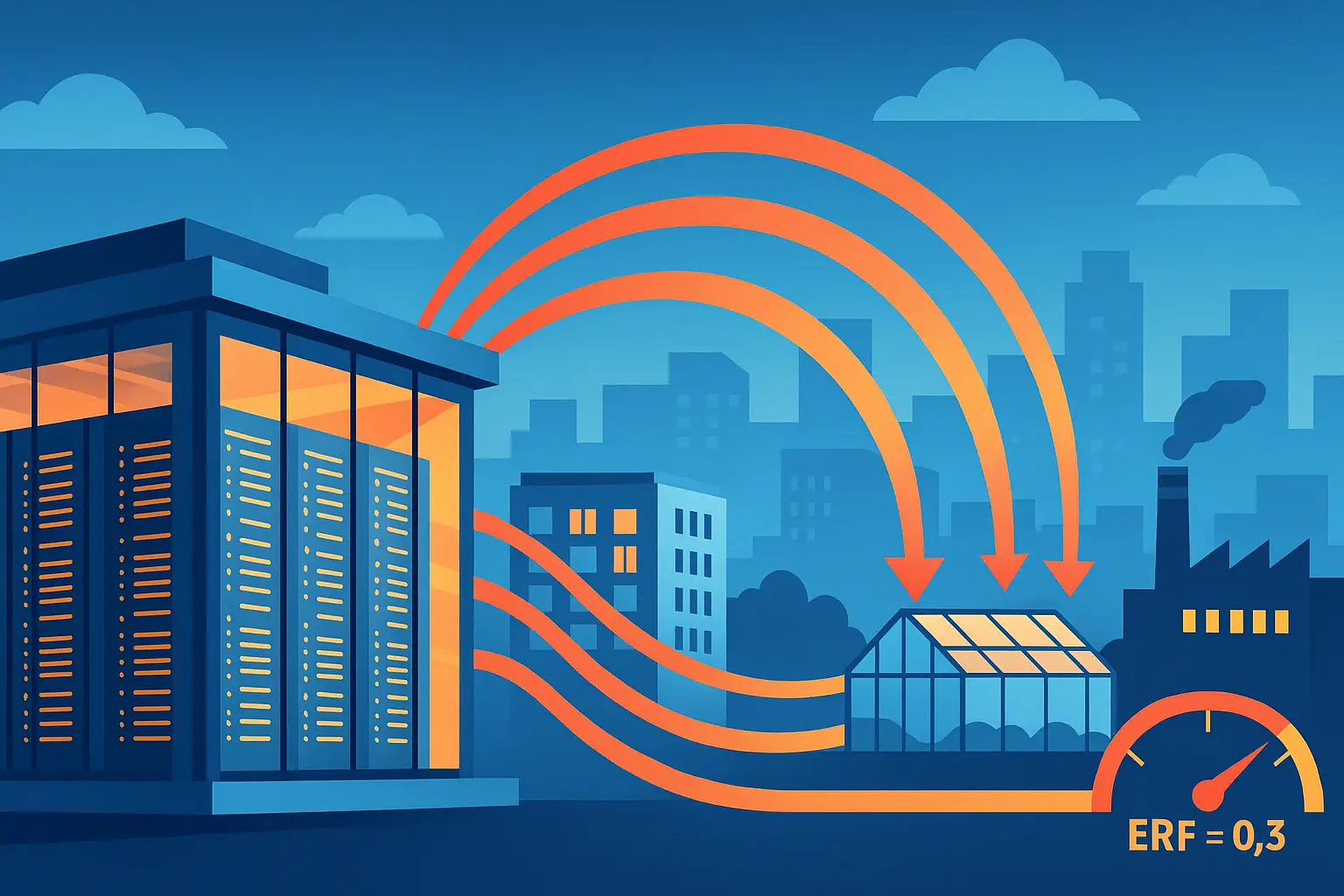
As enterprises increasingly prioritize environmental responsibility, DCaaS providers are embedding sustainability deep into their service offerings. By pooling demand across multiple tenants, DCaaS platforms can negotiate large-scale Power Purchase Agreements (PPAs) for 100 % renewable electricity, deploy on-site solar or wind arrays, and integrate battery storage or microgrids to smooth intermittency.
Providers expose real-time metrics—PUE, WUE and CUE—via customer portals or APIs, enabling joint monitoring of energy, water and carbon performance against corporate targets. Informative dashboards feed directly into ESG reporting tools (CDP, TCFD, CSRD), giving CIOs and sustainability teams the data they need for accurate, audit-ready disclosures.
On the compliance front, leading DCaaS vendors maintain a comprehensive suite of certifications—ISO 14001 for environmental management, ISO 50001 for energy systems, and regional attestations under the EU’s Corporate Sustainability Reporting Directive (CSRD) or the U.K.’s Streamlined Energy and Carbon Reporting (SECR).
They offer built-in Scope 2 emissions tracking using market-based and location-based methods, as well as assistance with upstream Scope 3 calculations for tenant hardware and logistics. Through regular third-party audits, SOC 2/ISO 27001 renewals and transparent SLA clauses around carbon-neutral targets, DCaaS ensures that your infrastructure not only runs efficiently but also meets the most stringent regulatory and investor-driven sustainability mandates.
Best Practices for DCaaS Sustainability & Compliance
- Renewable Procurement: Leverage provider-negotiated PPAs or green tariffs to lock in 100 % renewable energy for your footprint.
- Real-Time Reporting: Use embedded dashboards and APIs to automate PUE, WUE and CUE tracking in your ESG reporting workflows.
- Regulatory Alignment: Confirm provider holds ISO 14001, ISO 50001 and relevant regional certifications (CSRD, SECR, CSRD).
- Scope 3 Collaboration: Work with your DCaaS vendor to capture upstream emissions from IT equipment manufacture, transport and end-of-life.
- Audit & Assurance: Schedule annual third-party audits and include right-to-audit clauses in your SLA for independent verification.

DCaaS and Regulatory Compliance (Including Data Protection)
Navigating the complex web of data-protection and industry-specific regulations is one of the most critical considerations when consuming DCaaS. Because your workloads run on shared physical infrastructure, you must ensure that your provider’s controls and processes meet or exceed the mandates that govern your data. Below are the key compliance domains—and how a mature DCaaS offering can help you satisfy them:
1. Data-Protection Regulations
- GDPR (EU):
- Data Residency: Choose DCaaS nodes in EU-based facilities, with contractual commitments not to transfer personal data outside approved regions without appropriate safeguards.
- Data Processing Agreements (DPAs): Ensure the provider signs DPAs that mirror your obligations under Articles 28–32, including breach notification timelines.
- CCPA/CPRA (California):
- Consumer Rights Support: Verify the provider can assist with data-subject access requests, deletion requests and transparency reporting.
- Service Provider Contracts: Incorporate clauses prohibiting the provider from selling or profiling data beyond your instructions.
- HIPAA (U.S. Healthcare):
- Business Associate Agreements (BAAs): Require the provider to execute a BAA covering all physical and technical safeguards for ePHI.
- Audit Trails & Logging: Confirm detailed logging of all physical and virtual access to storage and compute nodes.
2. Industry and Regional Standards
- PCI DSS (Payment Card Industry):
- Segmentation: DCaaS offerings should support isolated VLAN or virtual-private data zones for card-holder data environments (CDEs).
- Encryption Controls: Encrypt data in transit (TLS 1.2+) and at rest (AES-256), with key management options that comply with PCI requirements.
- FedRAMP (U.S. Federal):
- FedRAMP Authorization: Look for “FedRAMP Authorized” DCaaS services at the appropriate impact level (Low, Moderate or High) to host federal workloads.
- Continuous Monitoring: Ensure the provider participates in ongoing ATO (Authority To Operate) renewal cycles, including vulnerability scanning and incident reporting.
- NIST SP 800-53 (U.S. Government):
- Control Inheritance: Map your required NIST controls (Access Control, Audit & Accountability, Media Protection, etc.) to the provider’s SOC 2 / ISO 27001 control set.
- Documentation: Maintain System Security Plans (SSPs) that document how DCaaS controls are inherited and supplemented by your own measures.
3. Technical & Contractual Safeguards
- Encryption & Key Management:
- Customer-Controlled Keys: Prefer DCaaS offerings where you retain sole custody of encryption keys (e.g., via an HSM or KMS federated to your environment).
- Bring-Your-Own-Key (BYOK): Ensure that if the provider rotates infrastructure, your key policies remain intact and isolated.
- Audit & Right-to-Inspect:
- On-Site Assessments: Include contractual rights for periodic on-site or remote audits—either by your own team or accredited third parties.
- Certification Evidence: Require up-to-date SOC 2 Type II, ISO 27001/27017, ISO 22301 and any region-specific attestations (e.g., ISO 27701 for privacy).
- Data Lifecycle & Exit:
- Data Erasure: Enforce NIST 800-88 “Clear” or “Purge” methods for secure deletion of storage media at end-of-life.
- Portability Guarantees: Define formats and timelines for returning backups, snapshots and logs in machine-readable form to support litigation holds or migration.
- Data Erasure: Enforce NIST 800-88 “Clear” or “Purge” methods for secure deletion of storage media at end-of-life.
Key Considerations for SLA Formulation for Businesses
Before committing to a DCaaS engagement, it’s critical to translate your reliability, performance and compliance requirements into concrete, enforceable SLAs. Well‐crafted SLAs not only protect your business but also drive alignment with the provider, ensuring that expectations around uptime, scaling, support and security are clear and measurable. Below are the key considerations—along with best practices—to help you formulate robust DCaaS SLAs:
- Availability Guarantees
- Define Scope: Specify availability targets for every component—power feeds, UPS, generators, cooling systems, network connectivity and even individual rack-level PDU circuits.
- Measurement & Reporting: Agree on an industry-standard measurement interval (e.g., monthly or quarterly) and automated reporting cadence.
- Service Credits: Include clear formulas for service credits or fee waivers if availability falls below the agreed threshold (e.g., 99.99 % uptime).
- Best Practice: Require 2N or N+1 redundancy in critical systems and mandate annual third-party audits to validate compliance.
- Performance Metrics
- Latency & Throughput: Set maximum round-trip times (e.g., < 10 ms within a region), I/O operations per second (IOPS) for storage tiers, and guaranteed network bandwidth.
- Packet Loss & Jitter: Define acceptable packet-loss (e.g., < 0.1 %) and jitter thresholds for real-time applications.
- Compute SLAs: If you rely on GPU‐accelerated or high-CPU instances, include minimum vCPU-to-memory ratios and GPU availability guarantees.
- Best Practice: Use synthetic transaction monitoring and periodic performance testing to validate these metrics end-to-end.
- Scalability & Provisioning
- Lead Times: Agree maximum lead times for expanding capacity—racks, sleds or storage arrays—down to specific increments (e.g., 1 rack within 48 hours).
- Automation Tools: Specify whether provisioning can be triggered via self-service APIs or requires manual ticketing.
- Elastic Policies: For burst scenarios, define auto-scale thresholds and rollback procedures to prevent runaway costs.
- Best Practice: Pilot your scale-out and scale-in workflows during onboarding to verify timing and API reliability.
- Support & Escalation Paths
- Coverage Windows: Clearly state “remote hands” availability hours (e.g., 24×7×365) and any additional fees for off-hours support.
- Response & Resolution: Define response (e.g., < 15 minutes for critical issues) and resolution time targets, with severity levels mapped to issue types.
- Escalation Matrix: Document the tiered escalation contacts—on-site technicians, network engineers, account managers—and their expected response SLAs.
- Best Practice: Include quarterly review meetings to assess support performance and update contact lists as staff change.
- Security & Compliance
- Physical Controls: Mandate biometric access, CCTV retention periods and visitor-logging requirements for your cages or cabinets.
- Certifications & Attestations: Require SOC 2 Type II, ISO 27001/27017 and HIPAA/PCI-DSS compliance where applicable, with annual audit reports delivered to you.
- Encryption & Segmentation: Specify encryption-at-rest and in-transit standards (AES-256, TLS 1.2+), plus dedicated VLANs or VXLAN segments for multi-tenant isolation.
- Best Practice: Include right-to-audit clauses allowing you or a third party to perform on-site assessments and vulnerability scans.
- Exit & Data Return
- Data Extraction: Define data-export formats, bandwidth allowances and timing (e.g., 30 days post-termination) to ensure you can retrieve backups or snapshots.
- Hardware De-provisioning: Specify how and when the provider will remove or wipe your physical assets, including certificates of destruction for drives.
- Clean-Break Testing: Conduct a “dry run” of the offboarding process during a low-risk phase to validate data integrity and process clarity.
- Best Practice: Include a rollback window where the provider must reinstate services at no extra cost if the exit process fails.
By embedding these detailed requirements and best practices into your DCaaS SLA, you’ll ensure a shared understanding of responsibilities, minimize operational risk, and secure the performance and compliance guarantees your business.

Costing & ROI Analysis
Beyond headline rates, a deep dive into DCaaS costing requires a holistic view of both direct and hidden expenses. By capturing every element—from hardware depreciation to ongoing data-center utility fees, staffing allocations, and even carbon levies—you can build a robust Total Cost of Ownership model that illuminates true long-term savings.
Usage-based billing further sharpens cost control, allowing you to align consumption patterns with your operational budgets and avoid surprise overages. When you layer in ROI drivers like accelerated time-to-market, reduced headcount for facilities management, and the elimination of costly maintenance windows, the financial case for DCaaS becomes crystal clear.
- Total Cost of Ownership (TCO): Compare DCaaS vs. CapEx builds by modeling hardware depreciation, data-center utilities, staffing and carbon levies.
- Usage-Based Billing: Forecast consumption patterns (compute hours, storage GBs, network egress) to optimize spend.
- ROI Drivers: Factor in faster deployments, reduced staffing overhead, and avoided facility maintenance costs.
Unlock On-Demand Infrastructure with DCaaS
Azura Consultancy’s DCaaS Advisory & Implementation
DCaaS Services
Feasibility Studies
Align technical, financial, and regulatory insights to validate DCaaS strategy before you invest.
Vendor Evaluation
Match each vendor’s capabilities against performance, security, and sustainability requirements.
Project Management
Oversee phases from design validation to rack rollout and network integration.
Migration Planning
Craft phased, low-risk transition paths that safeguard data integrity and minimize application downtime.
- Feasibility Studies: Assess technical, financial and regulatory viability for DCaaS adoption, including network requirements and site-selection. Learn about our Technical Due Diligence.
- Service-Provider Evaluation: Conduct unbiased vendor assessments across performance, cost, security and sustainability parameters.
- Project Management: Oversee rack rollout, cabling, network integration and DCIM setup with rigorous quality controls. See our Project Management
- Migration Planning: Develop phased workload migration strategies that minimize downtime and data loss.
- Ongoing Optimization: Tune PUE/WUE metrics, implement circular-economy asset reuse, and leverage digital-twin simulations for capacity planning and disaster-recovery drills.