


A Comprehensive Guide from Market Trends to Sector Applications
In today’s fast-moving industrial landscape, Digital Twins have emerged as a keystone technology—melding real and virtual worlds to drive smarter, faster decisions. This article weaves together the definition, evolution, market dynamics, practical guidance, sector-specific use cases, and a look ahead at what lies on the horizon.
What Is a Digital Twin?
At its essence, a Digital Twin is a living virtual replica of a physical asset, system, or process—complete with geometry, metadata, real-time sensor feeds, and analytic intelligence. Unlike static 3D models, a true twin:
- Continuously ingests data from IoT devices, PLC/SCADA systems, and BIM repositories.
- Applies analytics — from dashboards to AI/ML—for anomaly detection, prognostics, and optimization.
- Enables “what-if” simulations, allowing engineers to trial control strategies or design changes virtually.
Digital Twin Core Components
- 3D/BIM Geometry & Metadata
- Live & Historical Sensor Streams
- AI/ML Models for predictive maintenance
- Business Systems Integration (ERP, CMMS)
“Digital Twins have moved beyond buzzword status to become a cornerstone of modern asset- and process-centric industries.”
A Living Replica, Not Just a Model
- Continuously ingests data from IoT devices, PLC/SCADA systems, BIM repositories, and external sources (weather, energy markets).
- Applies analytics—from simple trend dashboards to advanced AI-driven fault detection—to turn raw signals into actionable insight.
- Enables “what-if” simulations so engineers can test optimization strategies (e.g., alternative cooling set-points) before touching any hardware.
The History of Digital Twins
The term “Digital Twin” first emerged in the early 2000s within aerospace circles, where NASA sought a virtual counterpart for spacecraft health monitoring. Over the next decade, breakthroughs in cloud computing and the Industrial Internet of Things (IIoT) allowed companies like General Electric to deploy twin-based platforms in manufacturing. By the mid-2010s, the construction and facilities world caught on: Building Information Modeling (BIM) began to feed geometry and metadata into operational twins, linking design intent with real-world performance.
- 2002–2010: NASA’s prototype “Vehicle Twin” experiments
- 2010–2017: Rise of IIoT platforms (e.g., GE Predix, Siemens MindSphere)
- 2015–2020: BIM-twin convergence in AEC and facilities management
- 2020–Today: Edge computing and 5G usher in low-latency, large-scale twin deployments
Projected Market Growth To 2030
According to Grand View Research, the global Digital Twin market is poised to skyrocket from USD 24.97 billion in 2024 to USD 155.84 billion by 2030, reflecting a blistering 2 percent compound annual growth rate. This runaway expansion underscores the urgency for organizations across every sector—from energy and utilities to manufacturing and smart cities—to invest in Digital Twin technology now, rather than risk falling behind in tomorrow’s hyper-connected, data-driven economy.

Regional Adoption Breakdown


What are the 4 types of digital twins?
In practice, Digital Twins can be classified into four hierarchical types—each building on the last to provide ever‐greater scope and insight.
1. Component (or Part) Twin
At the most granular level, a Component Twin models a single physical element—think a pump impeller, a bearing, or a sensor. By pairing that part’s geometry with its real-time condition (vibration, temperature, wear metrics), you can:
- Detect early signs of failure (e.g., bearing fatigue)
- Test alternative materials or designs in simulation before fabricating new parts
- Feed insights back to engineering for next-generation improvements
2. Asset Twin
An Asset Twin aggregates one or more component twins into a complete piece of equipment—such as an entire chiller, compressor, or motor. This level of twin gives you:
- A holistic view of interrelated components (e.g., how impeller wear affects bearing temperature)
- Predictive maintenance schedules driven by combined sensor analytics
- “What-if” scenarios for tuning operating parameters (e.g., varying RPM to optimize efficiency)
3. System (or Line) Twin
Stepping up, a System Twin models a network of assets working together—such as a district cooling plant’s chilled-water loop (pumps, chillers, heat exchangers, control valves). With a System Twin you can:
- Simulate process dynamics and thermal flows across multiple pieces of equipment
- Optimize control strategies (pump staging, set-point schedules) for overall energy savings
- Identify bottlenecks or failure modes that only emerge at the system level
4. Process (or Enterprise) Twin
At the top of the pyramid, a Process Twin (sometimes called an Enterprise Twin) captures end-to-end workflows or entire business operations—from raw-water intake through chilled-water distribution to customer metering and billing. This allows organizations to:
- Model and optimize cross-site or cross-department processes (e.g., procurement, maintenance, customer service)
- Tie operational KPIs (uptime, energy use, cost) directly to strategic goals and financial systems
- Run large-scale “what-if” analyses: for instance, evaluating the ROI of adding a new plant or integrating renewables into the cooling mix
Why the Distinction Matters?
By selecting the right level of twin for your objectives—whether you need part-level fault diagnostics or enterprise-wide process optimization—you can focus your data-collection, modeling, and analytics efforts where they’ll deliver the greatest value, then scale out to broader twins as your Digital Twin maturity grows.
Typical Architecture of Digital Twin Technology
- Data Layer
- High-fidelity 3D/BIM geometry enriched with asset metadata
- Live and historian streams from sensors (temperature, flow, vibration)
- Modeling & Simulation Layer
- Physics-based models (CFD, thermodynamics) for process behavior
- AI/ML pipelines for anomaly detection, prognostics, and optimization
- Integration Layer
- Secure gateways (OPC-UA, MQTT over 5G) bridging OT with IT
- APIs connecting ERP, CMMS, and project-planning systems
- Visualization & Interaction
- Web-based dashboards and AR/VR overlays for immersive fault diagnosis
- Role-based interfaces: operators, engineers, business managers
These building blocks have given rise to turnkey platforms—Microsoft Azure Digital Twins, PTC ThingWorx, Siemens Xcelerator—each offering templates, analytics modules, and developer toolkits to accelerate adoption.
A Glimpse Ahead: Emerging Directions
- Autonomous Closed-Loop Control: Digital Twins will not only forecast equipment failures but also autonomously adjust operating parameters—optimizing energy use or process throughput in real time.
- Ecosystem of Twins: Rather than isolated plant- or equipment-level twins, organizations will link multiple twins into “systems of systems,” enabling enterprise-wide optimization across supply chains, production lines, and building portfolios.
- XR-Driven Collaboration: Augmented and virtual reality tools will allow distributed teams to “step inside” a twin, conduct remote commissioning, and collaborate on maintenance tasks as if they were on site.
- Sustainability & Lifecycle Insights: New modules will embed carbon accounting and circular-economy metrics, empowering designers and operators to minimize environmental impact from cradle to grave.
- Marketplace Innovation: Open app stores for twin-based analytics—ranging from emissions reporting to advanced root-cause analysis—will foster a vibrant third-party ecosystem.
From Proof-of-Concept to Plantwide Value
Realizing the promise of Digital Twins requires more than flashy demos—it demands a structured approach:
- Scoping & Feasibility
- Select high-value pilot assets (e.g., chillers with rich sensor history).
- Audit existing data sources and identify gaps in sensor coverage or model fidelity.
- Estimate ROI by quantifying potential gains: reduced downtime, energy savings, extended asset life.
- Architecture & Build
- Define a clear data schema to unify BIM geometry, IoT streams, and business metadata.
- Develop behavioral models—both physics-based and data-driven—to represent system dynamics.
- Implement secure, low-latency connectivity using edge gateways, 5G, and industry protocols.
- Pilot & Scale-Out
- Launch a pilot twin on a single asset or subsystem to validate dataflows, analytics accuracy, and user experience.
- Create templated twin blueprints for rapid deployment across similar equipment or sites.
- Integrate with ERP/CMMS so that insights drive automated work orders and lifecycle planning.
- Governance & Adoption
- Assign clear ownership (typically a joint IT/OT team) and establish data-quality KPIs.
- Train end users—operators, engineers, managers—to embrace twin-driven workflows.
- Embed Digital Twin milestones into new-build and retrofit procurement, ensuring future facilities arrive “twin-ready.”
Leading Digital Twin Software
Through continuous monitoring, predictive analytics, and advanced what-if planning, Digital Twins ensure that renewable-energy investments deliver predictable returns—while smoothing the path toward a decarbonized energy future. Here are the top players in the market:
Siemens
Siemens has long been a pillar of industrial automation, and its MindSphere & Xcelerator suite embodies that heritage. Rather than bolting on analytics, Siemens weaves together its best-in-class PLM, CAD/BIM and IIoT offerings to deliver a seamless “digital thread” from design desk to control room.
- Market Reach: Commands roughly 12 % of the global Digital Twin market.
- What Sets It Apart:
- Full-stack continuity—from Teamcenter for design data through MindSphere for live operations.
- Edge + Cloud—Industrial Edge nodes let you preprocess data on-site, while cloud services power large-scale analytics.
- Why You Might Hesitate:
- The platform’s breadth can feel overwhelming for smaller installations.
- Licensing multiple modules (PLM, IoT, analytics) can drive up costs quickly.
IBM
IBM’s Digital Twin story is written on top of Maximo APM and TRIRIGA, two stalwarts of asset and facilities management. Its secret weapon is Watson AI, which brings sophisticated predictive and root-cause analytics into the same pane of glass as your maintenance work orders.
- Market Reach: Holds about 11 % of the market, thanks to deep penetration in large enterprises.
- Core Strengths:
- Business Systems Integration—tight links into ERP, CMMS, and ITSM workflows mean insights translate directly into action.
- Hybrid Flexibility—deploy on-prem, in private clouds, or across public cloud vendors.
- Potential Drawbacks:
- Some users find the interface less modern than emerging platforms.
- Getting Watson’s AI models to your exact asset fleet often involves heavyweight consulting.
GE Digital
Born in the heart of heavy industry, GE Digital’s Predix platform speaks the language of turbines, compressors, and power grids. Its out-of-the-box “industry blueprints” make it easy to stand up a gas-turbine twin or a wind-farm model—and its edge-first architecture keeps analysis close to the source.
- Market Reach: Around 8 %, concentrated in energy, aviation, and oil & gas.
- Notable Advantages:
- Vertical focus—prebuilt templates accelerate deployment in process and utility sectors.
- Edge Optimization—Predix Edge ensures low-latency analytics for remote or bandwidth-constrained sites.
- Where It Falls Short:
- Less emphasis on building/facilities use cases, making AEC projects feel like custom work.
- Migrating older Predix instances to the latest stack can require significant reengineering.
PTC
PTC’s ThingWorx makes a name for itself on rapid, low-code application development. When paired with Windchill for PLM and Vuforia for AR, it becomes a versatile platform—one where you can sketch out a twin dashboard in days and then overlay it on the shop floor via a tablet or headset.
- Market Reach: Roughly 7 %, with strong adoption among mid-sized manufacturers.
- Core Differentiators:
- Speed to Prototype—drag-and-drop tools let you prove value before committing to heavy customization.
- AR-First—built-in connectors to Vuforia power immersive maintenance and training experiences.
- Trade-Offs:
- Scaling to hundreds of sites may demand extra services or custom integrations.
- For advanced ML-based prognostics, you’ll often link out to third-party analytics engines.
Provider Summary
| Provider | Market Share | Key Strength | Key Weakness |
| Siemens | ~12 % | PLM + IoT integration | High complexity & cost |
| IBM | ~11 % | Enterprise AI & asset management | Dated UI, heavy tuning |
| GE Digital | ~ 8 % | Industry-specific blueprints | Narrower use cases |
| PTC | ~ 7 % | Low-code apps & AR support | Scaling & analytics depth |
Each of these platforms leads in different segments—so selection should hinge on your industry focus, existing IT/OT landscape, and pilot-to-scale roadmap.
Choosing the Right Digital Twin Partner
- Siemens is ideal if you need a single vendor to span design, simulation, and operations at industrial scale.
- IBM excels when your priority is tight integration with enterprise back-office systems and proven AI services.
- GE Digital shines in vertical domains—power, oil & gas, aviation—where its blueprints and OT heritage pay dividends.
- PTC wins if you need to move fast, prototype pilots, and bring immersive AR into your Digital Twin story.
Custom Open Platform Solution
To ensure a true vendor neutrality and avoid lock-in, we typically build custom Digital Twin platforms atop open-source components and open standards—while still leveraging the power of BIM and cloud services:
- Twin Management & Data Integration:
We use platforms like Eclipse Ditto or the FIWARE Context Broker to model, register, and synchronize twins of devices and assets. These open projects implement REST- and MQTT-based APIs so you can plug in any IoT gateway or SCADA system. - Open BIM for 3D Geometry & Metadata:
By storing all building and plant models in the IFC format on an openBIM server (e.g. BIMserver or xBIM), we guarantee full interoperability with authoring tools like Revit or ArchiCAD. - Cloud-Native Storage & History:
All time-series and event data flow into standard object stores—AWS S3, Azure Blob, or Google Cloud Storage—plus a historian (e.g. InfluxDB or TimescaleDB) for real-time dashboards and back-in-time analytics. - 3D Visualization:
For immersive, browser-based views, we integrate CesiumJS or js on top of your IFC geometry—so you can navigate your data-center or district-cooling plant in 3D without proprietary viewers.
By combining these open platforms and standards, Azura’s custom solution gives you the freedom to swap out any component—whether you move from one cloud to another, replace your IoT gateway, or upgrade your 3D engine—without rewriting your entire twin infrastructure.
Digital Twins Practical Applications
Digital Twins in Data Centers
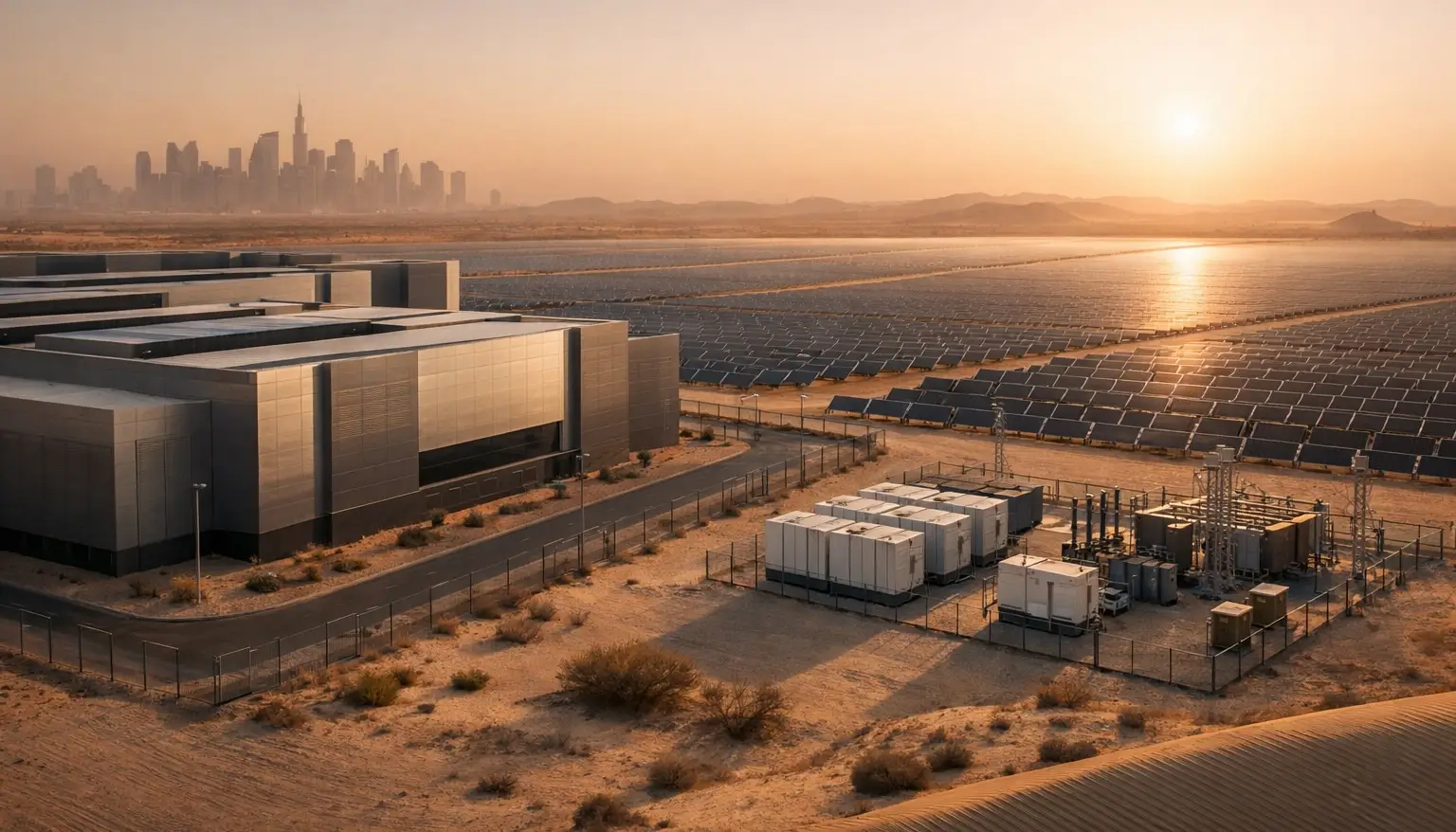
As data centers grapple with ever-increasing compute demands and energy costs, Digital Twins offer a powerful way to visualize, analyze, and optimize every facet of their operation. Rather than treating the facility as a monolithic block, a data-center twin models racks, CRAC units, power distribution, and cooling loops as interconnected digital entities—each feeding live telemetry into a unified platform.
In practice, this means:
- Hot-spot identification: Thermal sensors mapped onto a 3D floorplan quickly reveal areas of poor airflow or overloaded racks, allowing engineers to retune vent tiles or rearrange servers before temperatures exceed thresholds.
- PUE optimization: By simulating alternative cooling set-points, economizer modes, and fan-speed schedules in the twin, operators can reduce Power Usage Effectiveness (PUE) by 5–10% without risking downtime.
- What-if maintenance: Twin-driven “playback” of historical alarms and workload surges helps teams pinpoint root causes—whether a failing fan, a misconfigured BMS schedule, or an unexpected compute spike—before they impact SLAs.
Because every control change and infrastructure upgrade is first tested virtually, data-center managers achieve continuous performance gains while safeguarding uptime and capacity.
Digital Twins in District Energy
District energy systems—cooling networks, combined heat and power (CHP) plants, and thermal storage—operate as complex, interdependent loops. A Digital Twin recreates these loops in software, harmonizing hydraulic, thermal, and electrical models with live plant data to ensure peak efficiency and reliability.
- Dynamic load balancing: The twin ingests weather forecasts, building-level demand, and plant telemetry to schedule chillers and pumps, maximizing part-load efficiency and minimizing peak draws on the grid.
- Predictive maintenance: Vibration and temperature trends on pump shafts or heat-exchanger plates feed AI models that predict fouling or bearing failure weeks in advance, preventing unplanned outages.
- Scenario analysis: Whether it’s adding a new storage tank, replacing a chiller type, or integrating waste-heat recovery, the twin can simulate capital projects end-to-end—establishing ROI and payback timelines before a single dollar is spent.
By uniting plant operators, district planners, and finance teams around a single, data-driven view, Digital Twins accelerate decision-making and reduce energy costs for both providers and customers.
Digital Twins in the Power Industry
From generation assets to high-voltage transmission and distribution networks, the power sector faces the dual challenge of reliability and decarbonization. Digital Twins bridge the gap between physical grid infrastructure and advanced analytics, delivering near-real-time insights at every voltage level.
Typical applications include:
- Asset health monitoring: Turbine blades, transformer coils, and switchgear are each represented by a twin that tracks temperature, moisture, and vibration—allowing utilities to schedule maintenance on an as-needed basis rather than fixed intervals.
- Grid stability simulations: By linking generation-side twins (gas, hydro, nuclear) with a network-level model, planners can run contingency studies—testing how the grid responds to unplanned outages or sudden load shifts.
- Renewables integration: Wind-farm and solar-plant twins feed into system-wide models that anticipate variability, informing dispatch strategies, storage dispatch, and demand-response programs to maintain frequency and voltage within tight tolerances.
Through these capabilities, Digital Twins help utilities minimize downtime, defer costly capital replacements, and smoothly incorporate zero-carbon resources into an aging grid.

Digital Twins for Renewable Energy
As wind, solar, and battery-storage projects proliferate, developers and operators need granular control over every kilowatt produced or stored. Digital Twins empower renewable-energy assets to perform at their peak while feeding accurate forecasts into broader energy-management systems.
- Performance benchmarking: Turbine twins compare blade-pitch and rotor-speed data against design curves—isolating underperformers for targeted inspections or control-logic tweaks.
- Solar-array optimization: By modeling panel orientation, soiling rates, and temperature coefficients, the twin advises on cleaning schedules and inverter set-points to boost yield by 3–5%.
- Hybrid-asset coordination: In microgrids combining solar, wind, and batteries, a process twin orchestrates charge/discharge cycles, renewable curtailment, and backup dispatch—maximizing self-consumption and revenue from ancillary-service markets.
Azura Consultancy –Digital Twins Consultants
Azura Consultancy brings deep, cross-sector expertise to every Digital Twin engagement, ensuring that virtual replicas deliver tangible value across the design, build, and operate phases of any project.
Transform Your Assets with Digital Twin Excellence!
Collaborate with Azura Consultancy to Design, Build, and Operate Smarter, Leaner, and Greener Systems
A Foundation in BIM and Data Integration
At the heart of Azura’s Digital Twin practice lies our proven Building Information Modeling (BIM) capability. We don’t just create static 3D models—we fuse those models with live IoT feeds, AI/ML analytics, and maintenance histories to craft a truly dynamic Digital Twin:
- Custom Twin Frameworks: For each facility, we configure a twin that combines Revit-based geometry with SCADA and IoT sensor data, then layer on AI-driven simulations for optimization and fault-prediction Building Information Mo… L38-L40.
- End-to-End Data Continuity: From initial LOD300 design through LOD500 as-built and operations, our twins maintain an unbroken “digital thread,” ensuring every stakeholder—from architect to plant operator—works off the same live information.
Lateral Application Across Industries
Because our Digital Twin approach is fundamentally data-driven and modular, Azura has successfully adapted it to diverse sectors:
- District Energy & Cooling: We integrate thermal-network models with real-time plant telemetry—optimizing chiller sequencing and load balancing while forecasting maintenance needs long before equipment alarms trigger. Our district energy teams leverage the same twin-ready workflows whether it’s cooling plants, CHP installations, or thermal-storage tanks District Energy Solutions.
- Data Centers: By overlaying power, cooling, and rack-level sensor data onto 3D floor-plans, Azura helps operators identify hot-spots, simulate airflow improvements, and drive PUE reductions in live environments.
- Telecom & Smart Cities: Our twins tie cellular-network performance and urban-scale IoT networks back to physical infrastructure—enabling planners and maintenance crews to visualize coverage gaps, test densification strategies, and predict outage impacts before they occur.
- Power & Energy Assets: From gas turbines to grid substations, we build asset twins that integrate with CMMS/EAM systems, automate work-order generation, and run “what-if” scenarios for carbon-capture or renewables integration.
Delivering Value in Design, Build, Operate
- Design Phase
- Collaborate with architects and engineers using a shared twin environment
- Run 4D/5D simulations (schedule and cost) alongside performance models
- Construction & Commissioning
- Validate as-built conditions against the design twin in real time
- Automate clash detection and commissioning checklists through the twin
- Operations & Maintenance
- Monitor system health with predictive-maintenance alerts
- Continuously optimize energy use via live “what-if” scenario testing
- Feed operational insights back into future designs, closing the lifecycle loop
By combining our foundational BIM experience with robust IoT integration and AI/ML partnerships, Azura Consultancy not only stands up world-class Digital Twins—but does so in a way that can be reused, scaled, and tailored to virtually any asset-intensive business.